
Medical device OEMs operate in an environment where part failure is not an option. A microscopic burr on a surgical tool or a dimensional deviation in a pump housing can compromise patient safety and trigger catastrophic regulatory recalls. Sanluo Precision addresses these exact failure modes. As a Shenzhen-based manufacturer specializing in high-precision medical device component manufacturing, we produce critical parts ranging from ventricular assist pumps to glaucoma surgical tools. We hold dimensional tolerances to ±0.001mm and achieve surface roughness down to Ra 0.05μm.
We built our facility to serve global medical device manufacturers who require zero-defect machining. By supporting small-batch production with a minimum order quantity (MOQ) of just one piece, we allow engineering teams to validate designs using the exact custom medical CNC machining services that will eventually scale into their production runs.
Hitting a one-micron tolerance on a prototype is a technical achievement. Hitting it consistently across a production run while maintaining an unbroken chain of documentation is a regulatory mandate. Many general machine shops can dial in a lathe to produce a single accurate part. Very few operate the stringent quality management systems required to prove that the thousandth part perfectly matches the first.
An FDA auditor evaluating a device history record expects complete visibility. They look for documented proof linking the finished component back to the raw material melt. Sanluo Precision operates in strict compliance with FDA 21 CFR Part 820 and recognized ISO quality systems. This means our manufacturing processes are fully validated before the first chip is cut. Every parameter—from spindle speed to coolant pressure—is locked down.
When you source FDA compliant CNC machining from China, the risk often lies in documentation gaps rather than raw machining capability. We close that gap. Our inspection routines, material certifications, and non-conformance reporting integrate directly into your supplier quality management system. You receive components that meet print specifications, backed by the paperwork required to clear regulatory hurdles.
Standard cutting techniques break down when applied to advanced medical alloys. Materials like 316L stainless steel, titanium Grade 5, and implantable PEEK require specific tool geometries and rigid machine setups to prevent work-hardening or thermal distortion. We configure our production floor specifically for the challenges of medical grade stainless steel machining and exotic alloy processing.
Cardiovascular components operate under continuous dynamic stress. In devices like ventricular assist pumps, the clearance between a high-speed impeller and its housing dictates the pump's efficiency and directly impacts hemolysis rates—the destruction of red blood cells. Too tight, and the pump binds. Too loose, and fluid shear damages the blood.
We utilize micro CNC machining for medical implants to hold these critical clearances. Vascular stents and pump rotors demand pristine surfaces. Blood-contacting faces cannot harbor microscopic tooling marks that might initiate thrombosis. By achieving an as-machined surface finish of Ra 0.05μm, we eliminate the need for aggressive secondary polishing operations. Hand polishing is notoriously inconsistent and can easily alter a part's geometry, pushing a ±0.001mm tolerance out of spec. Machining the finish directly into the part ensures geometric fidelity remains intact.
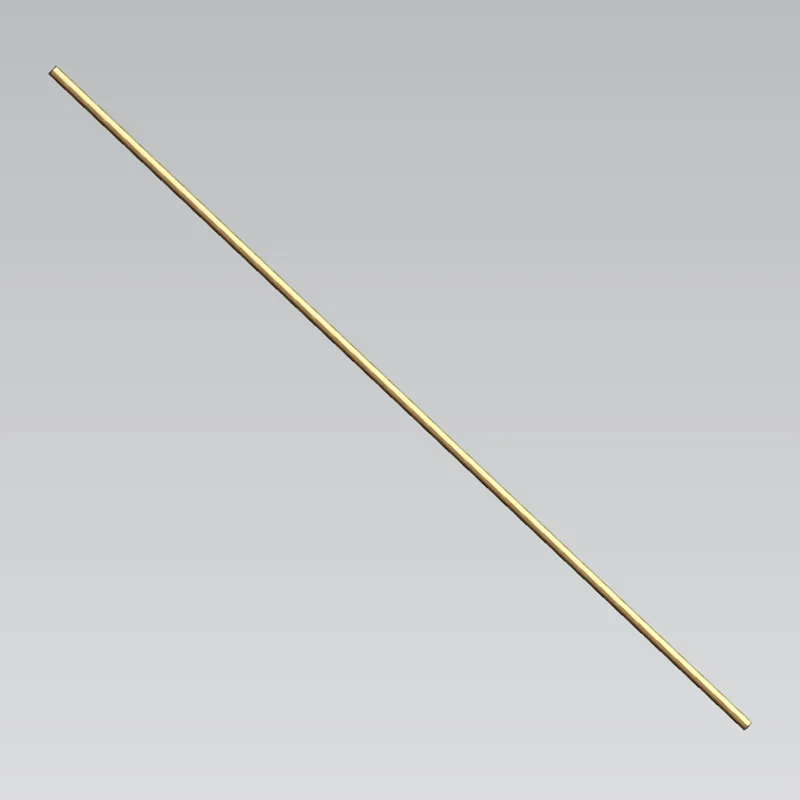
Surgical instruments often feature extreme length-to-diameter ratios. Trocars, phacoemulsification tips, and shafts for glaucoma surgical tools are long, thin, and highly susceptible to deflection when pressed against a cutting tool. Standard lathes struggle here; the pressure of the cut pushes the material away, causing chatter and tapered diameters.
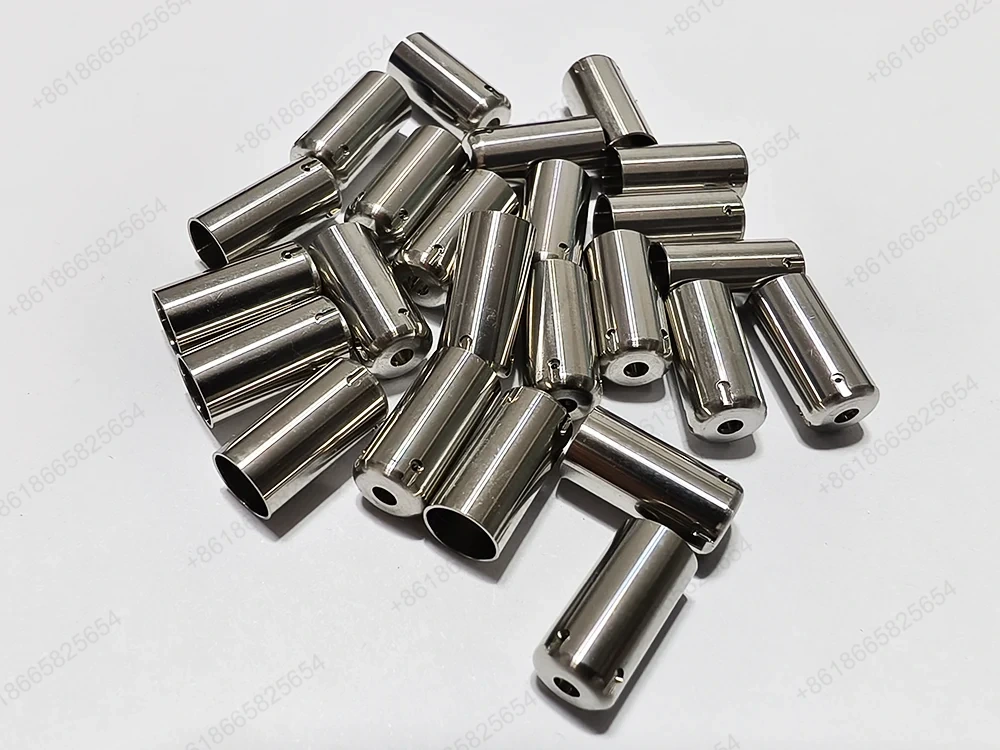
We deploy Swiss lathe machining for medical screws and slender instruments to solve this physics problem. In a Swiss-style lathe, the bar stock feeds through a guide bushing. The cutting tool operates mere millimeters from this point of support. Because the material is supported exactly where the cutting force is applied, deflection drops to near zero. This kinematic arrangement allows us to turn complex ophthalmic instruments with extreme concentricity, performing turning, milling, and cross-drilling in a single setup. Dropping parts complete from the machine eliminates the stacking errors that occur when moving parts between different milling and turning centers.
You cannot inspect quality into a part after the fact. You have to machine it there. Holding a medical CNC machining 0.001mm tolerance requires controlling environmental and mechanical variables that most shops ignore.
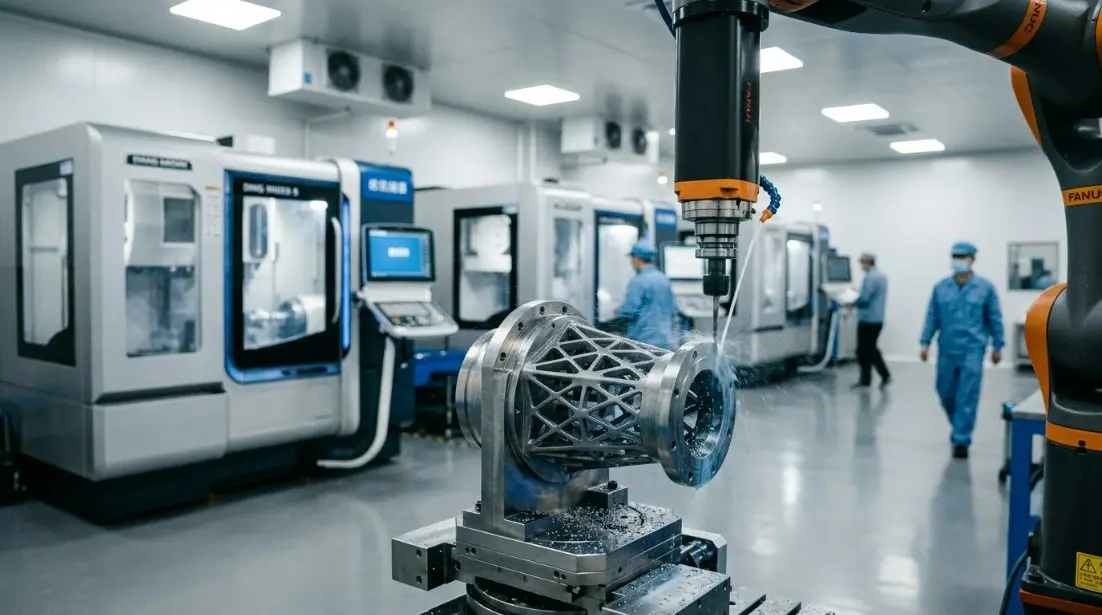
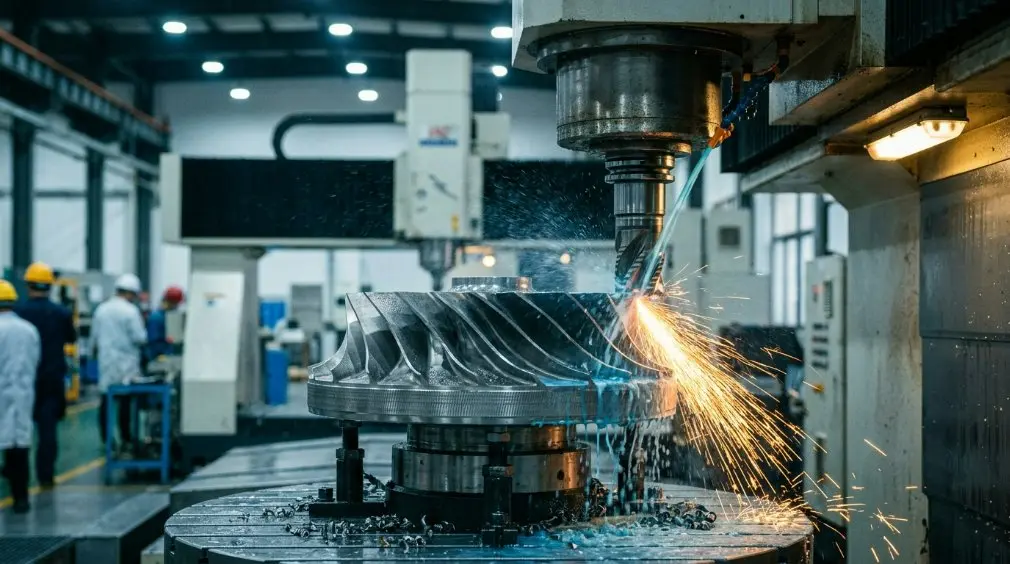
A simple two-degree Celsius fluctuation in ambient temperature will cause a machine casting to expand, shifting the cutting tool far enough to ruin a sub-micron tolerance. We control thermal drift at the source. Our machining centers utilize chilled coolant systems to maintain constant temperatures at the cutting zone, while the facility itself is strictly climate-controlled. We rely on ultra-stiff spindles and high-frequency vibration damping to eliminate the microscopic chatter that degrades surface finishes. When cutting titanium or hardened stainless steel, we specify custom diamond and sub-micron grain carbide tooling designed to shear the material cleanly rather than tearing it.
In high-precision medical manufacturing, a tool does not need to break to ruin a part. A microscopic chip on the cutting edge or a few microns of abrasive wear is enough to push a critical diameter out of tolerance or degrade a Ra 0.05μm finish into a Ra 0.20μm finish.
Sanluo Precision integrates Acoustic Emission Tool Monitoring into our machining centers. This AI-driven technology listens to the high-frequency sound waves generated during the cutting process. By establishing a baseline acoustic signature for a perfect cut, the system monitors every subsequent cycle in real time. If a carbide endmill begins to dull or a drill bit loads up with material, the acoustic signature spikes. The system detects this onset of wear milliseconds before it impacts the part, automatically compensating for the wear or halting the machine to prompt a tool change. This active monitoring is how we guarantee zero-defect manufacturing across complex production runs.
A beautifully machined part is useless to a medical device OEM if its origins cannot be proven. Regulatory bodies require objective evidence that manufacturing processes are stable, capable, and strictly controlled. As an ISO 13485 certified CNC machining supplier equivalent, we integrate rigorous validation frameworks into our daily operations.
We utilize Advanced Product Quality Planning (APQP) protocols before production begins. This involves conducting Failure Mode and Effects Analysis (FMEA) on our machining processes to identify and engineer out potential manufacturing risks. For production runs, we supply complete Production Part Approval Process (PPAP) documentation. This includes control plans, dimensional layouts, and capability studies proving our machines hold the required Cpk values for your critical-to-quality (CTQ) dimensions.
Material traceability is absolute. We source medical-grade alloys exclusively from certified mills. Every batch of material entering our facility is logged, and its mill test report (MTR) is tied to your specific job number. If a component is ever flagged in the field years later, we can trace it back through the machine it was cut on, the operator who ran it, and the exact billet of raw material it originated from.
Engineering teams frequently run into supply chain bottlenecks because they evaluate CNC machining partners based solely on a generalized equipment list. Having a high-end Swiss lathe does not automatically qualify a shop to cut surgical instruments. When vetting a partner for high-risk device components, buyers should assess the following specific criteria:
The most vulnerable phase in medical device development is the transition from prototype to production. Moving a successful design from a quick-turn prototype shop to a high-volume contract manufacturer introduces massive technology transfer risks. The new supplier uses different machines, different tooling strategies, and different inspection methods. Parts that worked perfectly in clinical trials suddenly fail in production due to subtle shifts in the manufacturing process.
Sanluo Precision eliminates this risk by handling both phases under one roof. Because we support an MOQ of one piece, your engineering team can utilize our full production infrastructure for early validation builds. We develop the CNC programs, design the workholding, and establish the inspection routines during the prototype phase.
Once the FDA clears your design and you are ready to scale, nothing changes. The exact same spindles cut the metal. The exact same coordinate measuring machines verify the dimensions. The process is simply scaled up. This continuity ensures that the parts hitting your assembly line behave identically to the ones that passed your initial validation tests.
If your current supply chain struggles with sub-micron tolerances, complex Swiss turning, or rigorous regulatory documentation, it is time to evaluate a dedicated medical machining partner. Review our capabilities and request a consultation for your next critical component by exploring our medical-grade CNC machining solutions.