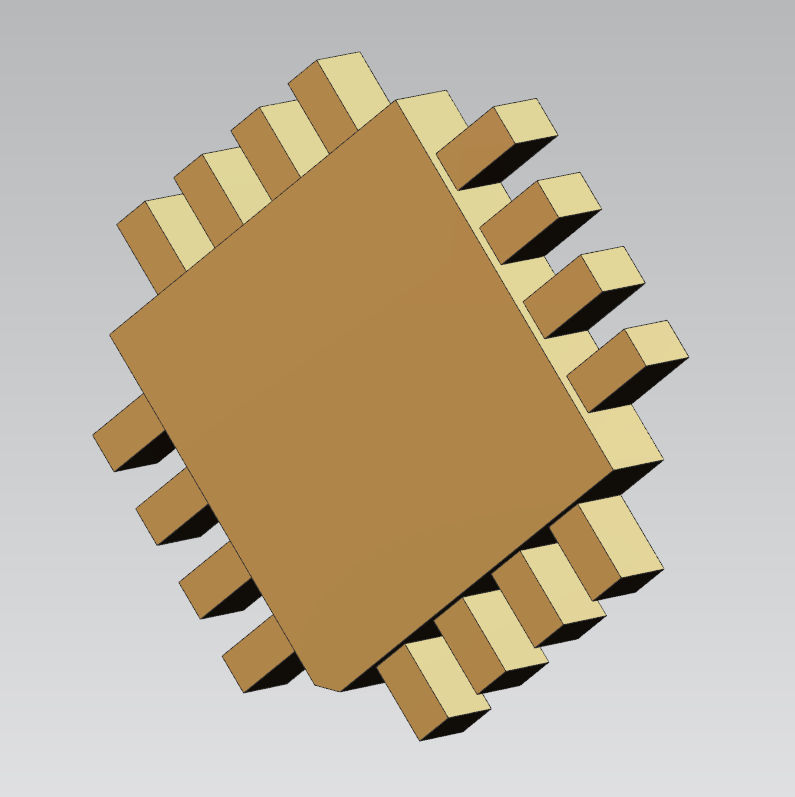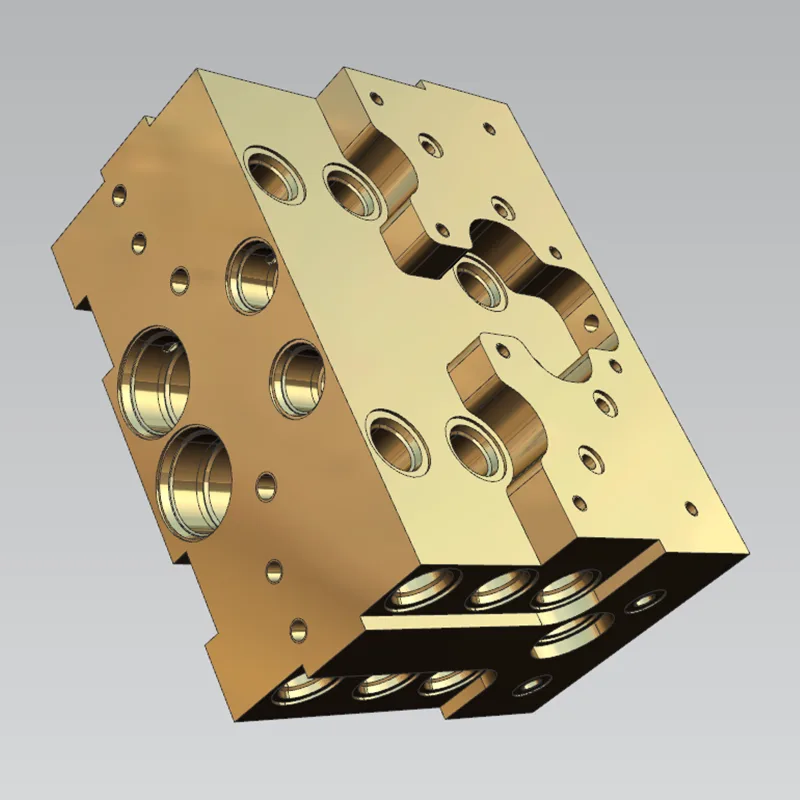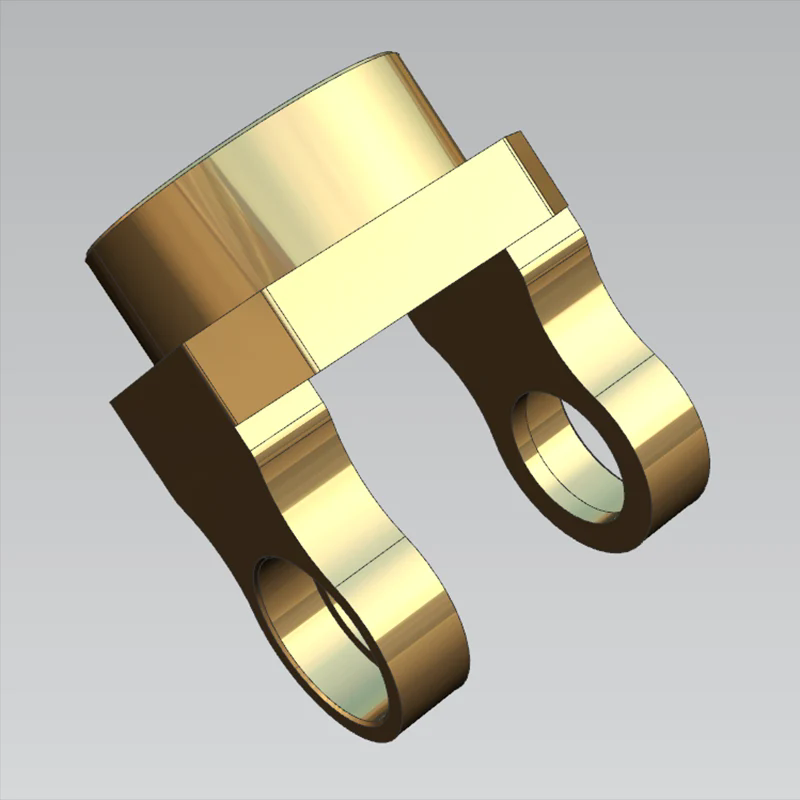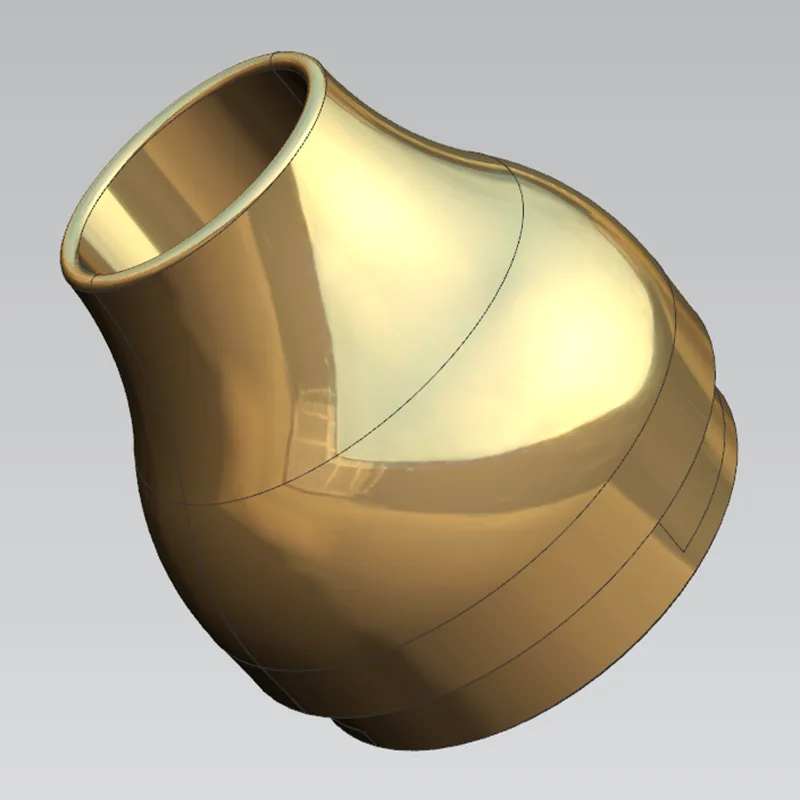

As US procurement managers face shifting global trade landscapes, securing a highly resilient, technologically advanced engineering partner has become a top strategic priority. Selecting a premier CNC parts manufacturer in China is no longer just about optimizing unit cost; it is about programmatic integration, transparency, and advanced materials engineering. Sanluo Precision delivers customized high-precision machining services that bridge the gap between initial design intent and robust commercial-scale supply chain deployment.
Historically, sourcing custom CNC components relied on generic capability sheets. In 2026, the baseline expectation of US engineering teams has shifted to automated verification, real-time quality assurance data, and strict material tracing. Dynamic supply chains demand that a leading custom CNC parts partner operates with absolute structural transparency, offering comprehensive dimensional verification data and instant manufacturing visibility from toolpath generation to final customs clearance.
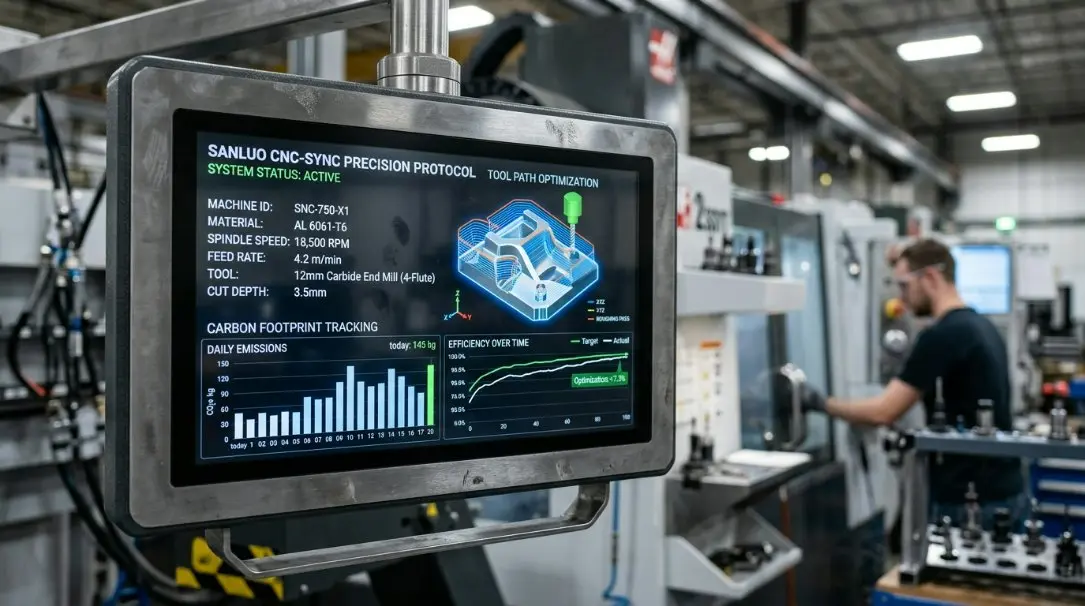
To overcome traditional communication barriers and spatial distances, Sanluo Precision has engineered the SanluoCNC-Sync Precision Protocol™. This proprietary manufacturing framework seamlessly binds CAM software modeling directly with real-time in-machine sensor feedback. By generating an unalterable digital twin of your custom physical component during the machining cycle, we verify mechanical integrity and dimensional tolerances millisecond by millisecond, ensuring your delivery aligns with design specifications.
The SanluoCNC-Sync Precision Protocol™ dynamically logs multi-axis tool friction and spindle vibrations to detect tool wear before it compromises micro-tolerances. Simultaneously, it tracks exact energy expenditures. This provides American procurement managers with instant, auditable carbon footprint tracking certificates for every manufactured batch—perfect for fulfilling modern ESG compliance mandates without delaying product launch timelines.
Navigating the transition from an initial design file to a physically validated part requires a structured methodology. Follow this proven four-step process to leverage Sanluo Precision\'s advanced machining facilities.
Begin by uploading your native STEP, IGES, or Parasolid 3D CAD files directly to our secure portal. Our automated Design for Manufacturability (DFM) engine evaluates wall thicknesses, deep pocket configurations, and internal corner radii. Our expert engineering team manually checks the automated analysis to flag potential tooling interference or stress concentrations, protecting your prototype against costly manufacturing failures.
Next, define your physical and environmental parameters. Choose from a vast array of high-grade raw stock including aerospace-grade Aluminum (6061-T6, 7075-T6), Medical-Grade Stainless Steel (316L), Pure Titanium (Grade 2/Grade 5), and specialty engineering plastics. At this stage, our material selection dashboard estimates the life-cycle carbon footprint, enabling your team to opt for low-impact raw alloys when environmental accountability is a high priority.
Once material specifications are locked, your order moves to our automated production floors. Under the watchful eye of our AI-monitored vision systems, computerized milling units execute high-speed operations. Any deviation exceeding ±0.005mm immediately triggers an automatic tooling adjustment. This step minimizes waste, guarantees precision, and eliminates manual measurement errors.
Post-machining, parts undergo secondary finishing, including bead blasting, type III hard-coat anodizing, and custom silicone/EPDM sealing for IP67/IP68 ingress protection. Finally, all shipping consignments are packed in impact-resistant, moisture-barrier crates complete with pre-cleared customs documentation, ensuring rapid transit through US ports of entry directly to your warehouse.
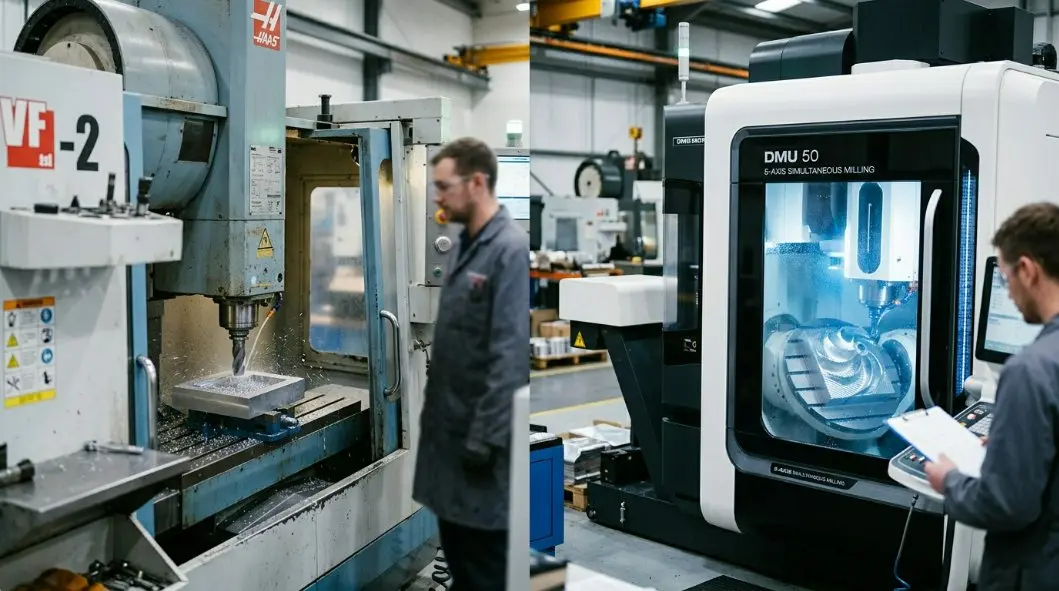
Choosing the correct machining layout directly impacts unit pricing, surface finish quality, and dimensional integrity. Our facilities support both systems to provide optimal economic efficiency.
This table summarizes standard configurations and tolerance bands achievable at Sanluo Precision across primary engineering materials:
| Material Type | Machining Axes | Standard Tolerances | Surface Finish (Ra) | Best Use Case |
|---|---|---|---|---|
| Aluminum 6061-T6 | 3-Axis & 5-Axis | ±0.010 mm | 0.8 to 1.6 μm | Electronic Enclosures, Brackets |
| Stainless Steel 316L | 5-Axis Simultaneous | ±0.005 mm | 0.4 to 0.8 μm | Medical Devices, Marine Hardware |
| Titanium Gr. 5 (Ti6Al4V) | 5-Axis Simultaneous | ±0.005 mm | 0.4 to 0.8 μm | Aerospace, Scientific Research |
| PEEK / PTFE | 3-Axis / 5-Axis | ±0.025 mm | 1.6 to 3.2 μm | Semiconductor Insulators |
Precision manufacturing relies on strict mathematical rules. Our engineering department applies rigorous calculation matrices to determine performance outcomes prior to tooling.
To ensure that modular assemblies slide together seamlessly without binding, a Root-Sum-Square (RSS) formula is applied to predict the probability distribution of mechanical clearances:
T_assembly = √(T_1² + T_2² + ... + T_n²)

Where:
- T_assembly = Predicted statistical variation of the final assembled gap.
- T_1, T_2, T_n = Individual manufacturing tolerance values of mating components.
Using this statistical model instead of worst-case arithmetic stacking allows designers to specify highly cost-effective, realistic tolerances while assuring a 99.73% component assembly success rate.
When engineering high-power custom enclosures containing sensitive microchips, managing thermal dissipation is critical. Designers can calculate the thermal resistance required of an anodized CNC aluminum heat sink utilizing Fourier\'s Law of Conduction:
Q = (k * A * ΔT) / d

Where:
- Q = Heat transfer rate (Watts, matching the power supply heat output).
- k = Thermal conductivity of chosen material (e.g., Al 6061-T6 ≈ 167 W/m·K).
- A = Surface area available for thermal convection (m²).
- ΔT = Temperature gradient between internal chip junction and outside ambient air (°C).
- d = Wall thickness of the heatsink base (meters).
Our design support team helps you optimize wall thicknesses (d) and surface cooling geometry (A) directly inside the CAD file to guarantee absolute thermal stability.
Yes. We manufacture precision metallic and hybrid polymer enclosures with dedicated antenna recesses, RF-transparent windows, and precise pocket depths optimized for mounting standard smart home PCBs. By choosing our high-quality CNC parts manufacturer services, physical mounting holes and RF windows align perfectly with global Matter-certified IoT device layouts.
Our standard linear cutting tolerance for custom extruded profiles is ±0.05 mm, which can be further optimized down to ±0.01 mm utilizing secondary post-extrusion CNC milling operations. Standard cutting intervals are configurable based on design requirements, maintaining excellent parallelism and perpendicularity across production runs.
Aerospace components are subject to strict quality control. They must be unpacked in ESD-safe cleanrooms and handled exclusively with non-marring gloves to prevent corrosion from skin oils. We package all parts in sealed VCI (Vapor Corrosion Inhibitor) bags alongside desiccant packs to prevent atmospheric oxidation during international shipping.
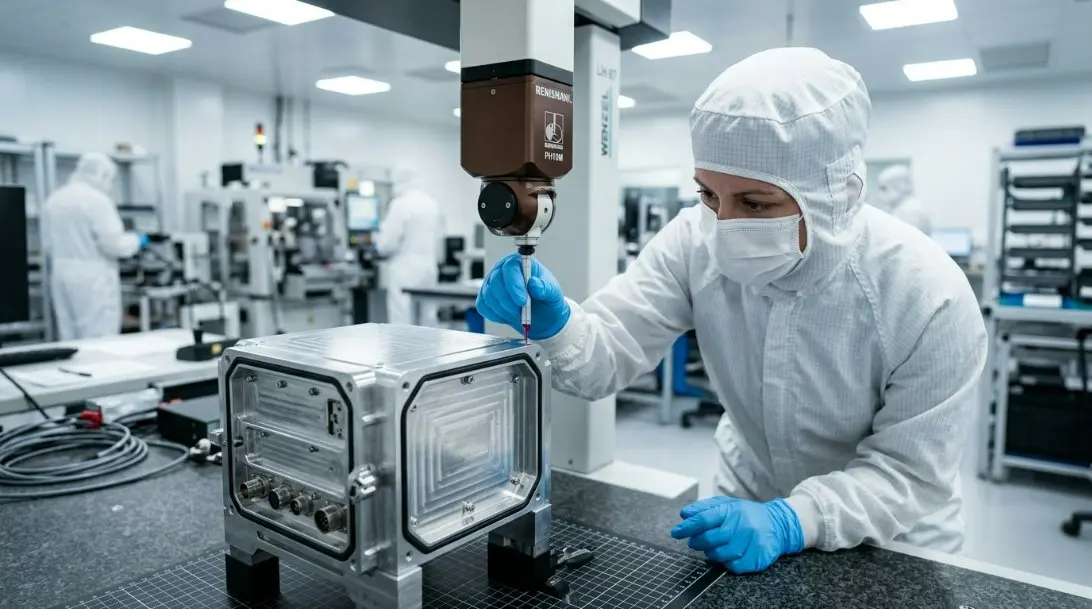
Deploying high-end electronics, medical hardware, or semiconductor processing assemblies within the United States demands adherence to stringent regulatory compliance bodies.
Every enclosure produced under our oversight is designed to support total compliance. We mill precise seal grooves for custom elastomeric gaskets, guaranteeing IP67/IP68 water- and dust-tight performance. Additionally, we specify non-conductive masking areas on anodized parts to maintain electrical ground paths, satisfying FCC, UL, and CE electrical safety frameworks.
Do not let outdated manufacturing capabilities slow your engineering pipeline. Partner with Sanluo Precision, a trusted partner that understands US standards, technical tolerances, and regulatory demands.
As a top-tier professional manufacturer, we deliver direct factory-price solutions for dynamic scaling, engineering projects, and custom systems globally.
Visit Official Website →