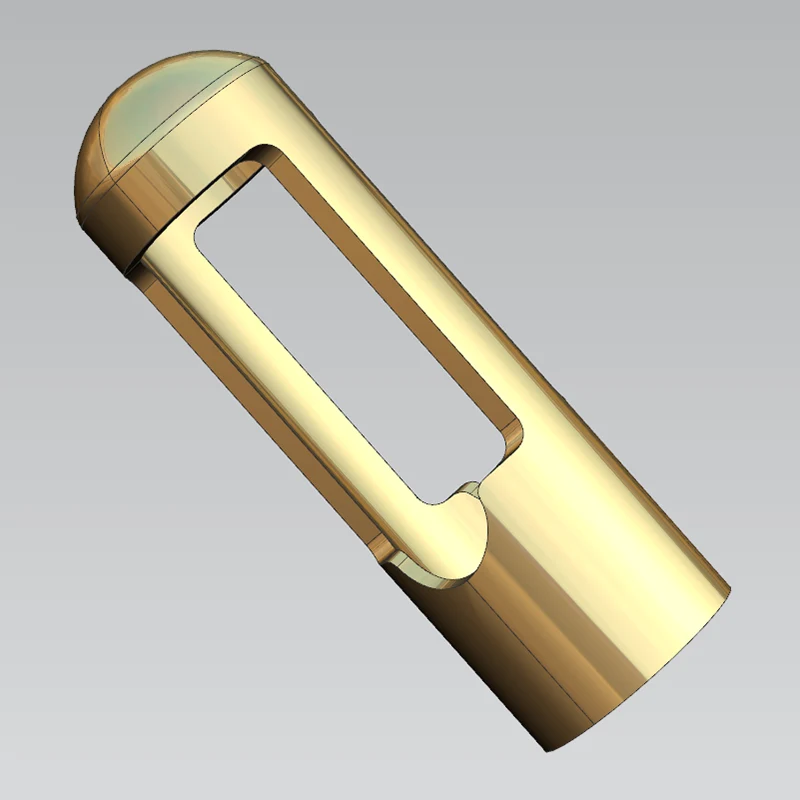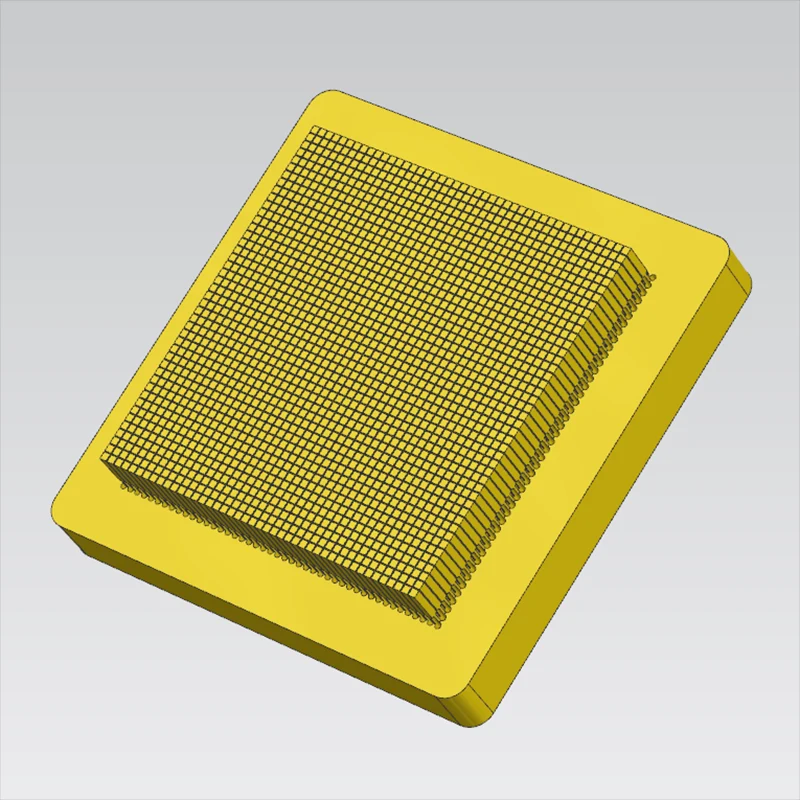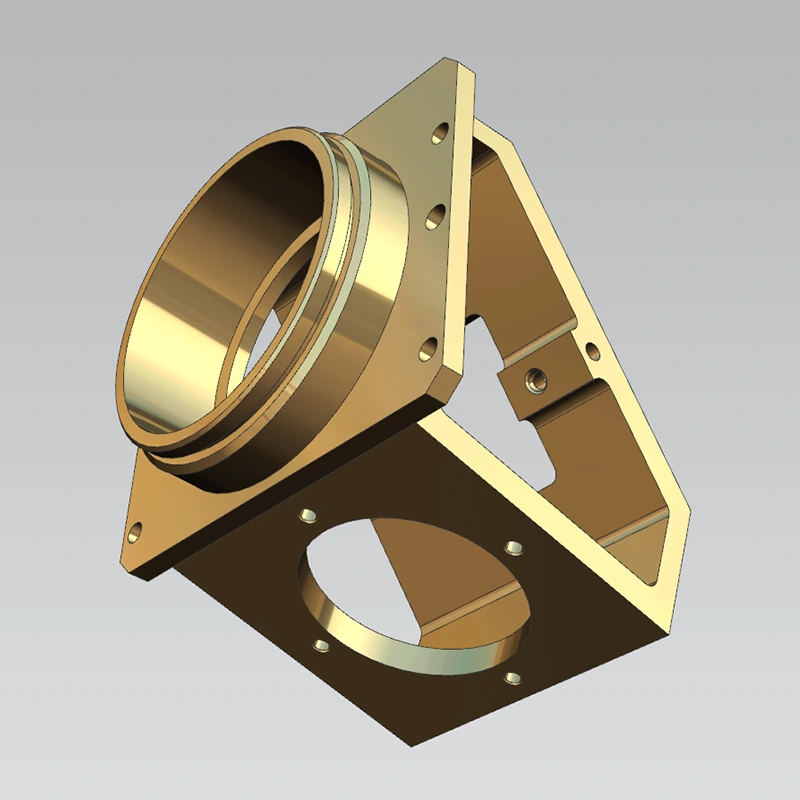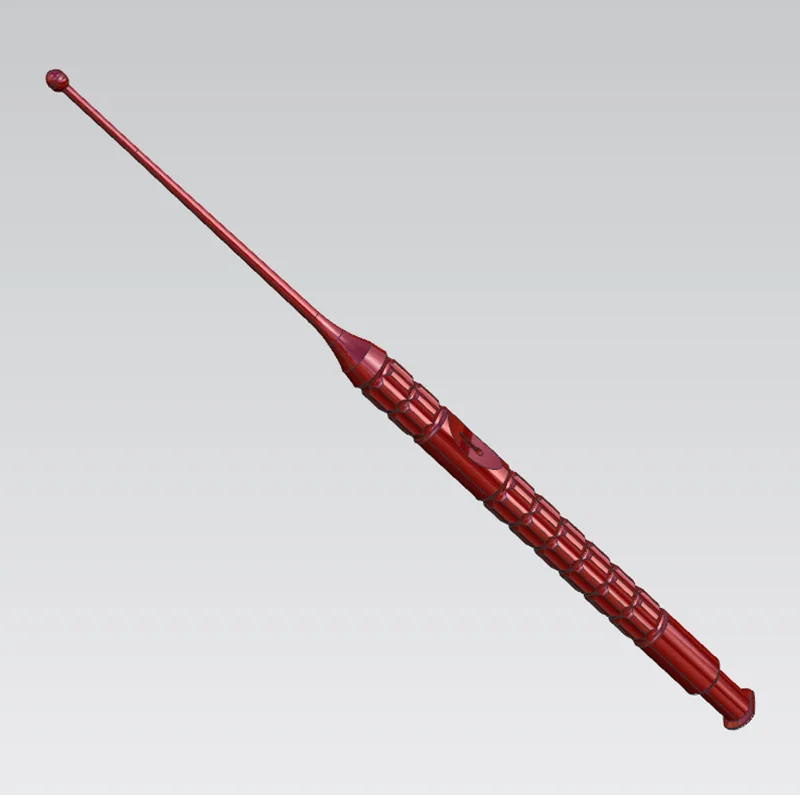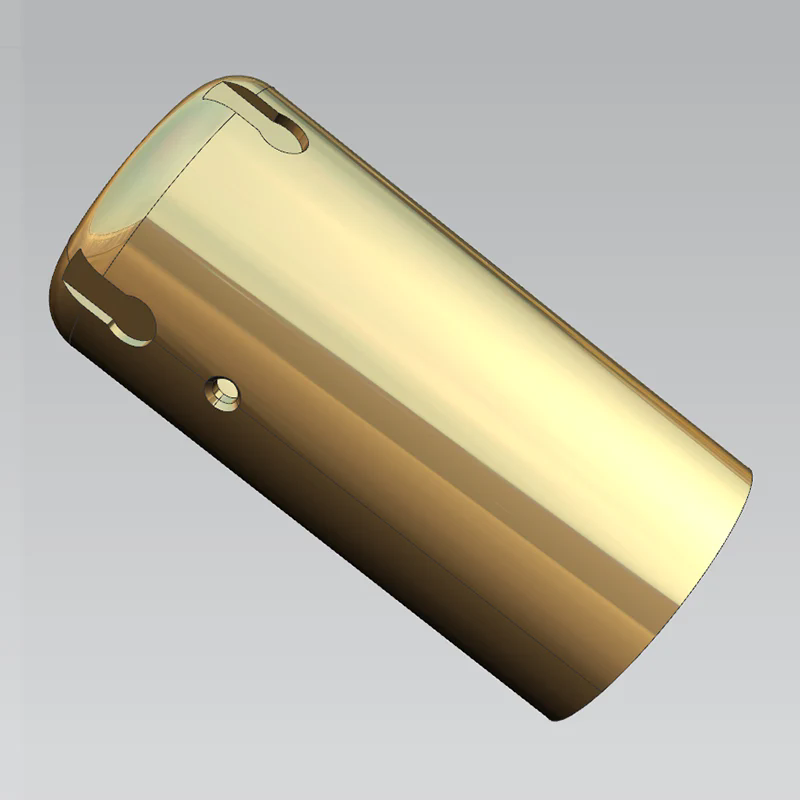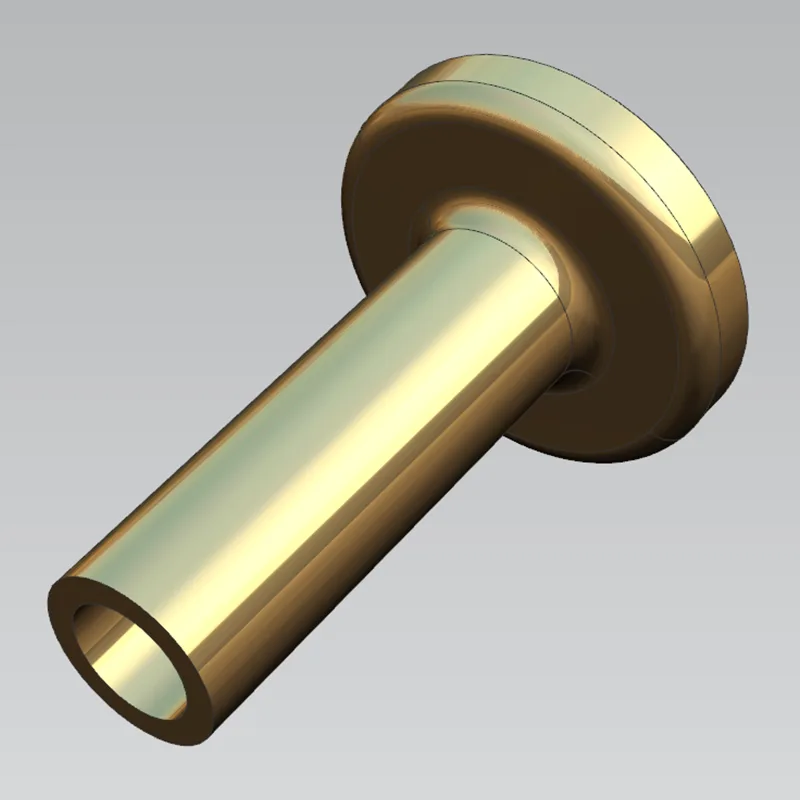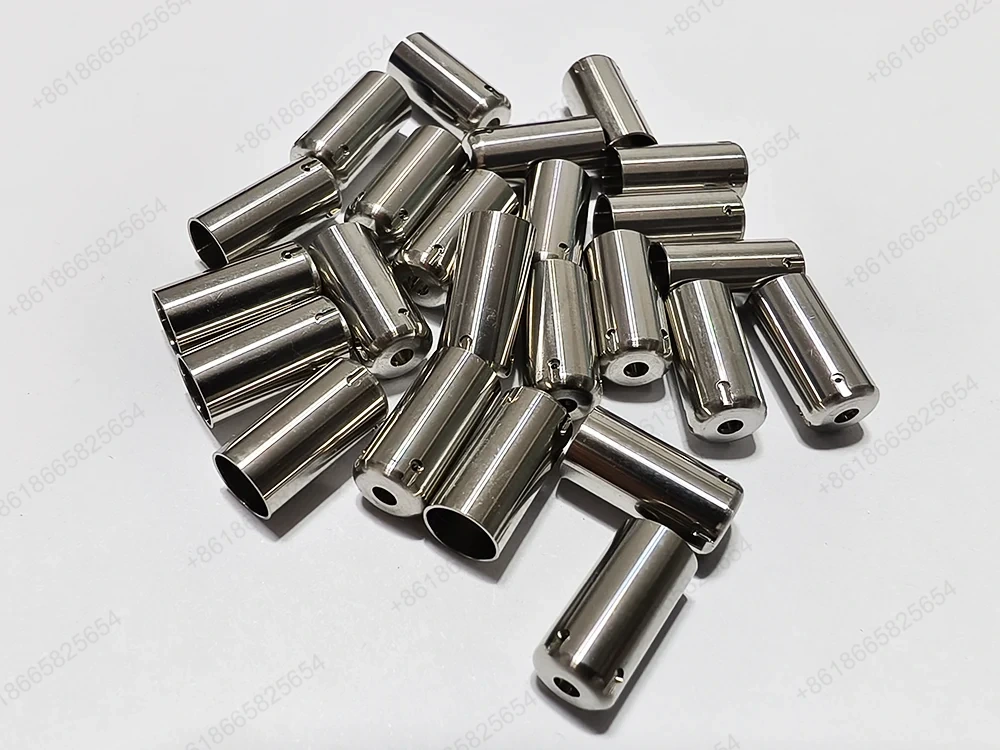

For US medical device manufacturers and procurement executives, sourcing high-precision parts internationally requires a delicate balance of extreme technical capability, absolute regulatory adherence, and supply chain cost predictability. As we look toward 2026, the demand for sophisticated, biocompatible components is surging. Standardizing processes across borders is no longer just about cost reduction; it is about building a secure, transparent, and resilient supply ecosystem. Sanluo Precision stands at the forefront of this shift, offering robust capabilities in manufacturing custom medical components designed to excel under stringent FDA review processes.
Navigating modern trade landscapes requires proactive structural frameworks. To address the complexities of US Section 301 tariffs and fluctuating customs duties, Sanluo Precision implements sophisticated supply-chain pathways. These include optimized Harmonized Tariff Schedule (HTS) classifications, specialized dual-sourcing documentation, and coordination with foreign-trade zones (FTZs) and bonded warehouses. Simultaneously, we prioritize Environmental, Social, and Governance (ESG) compliance by using energy-efficient multi-axis CNC machines, fully recyclable cooling lubricants, and implementing a strict zero-waste-to-landfill strategy for raw metal chips.
To eliminate the "black box" feel of overseas manufacturing, Sanluo Precision has integrated real-time AI-monitored vision systems along our production lines. Every milling, turning, and micro-machining cycle is cross-referenced with the initial CAD design. US clients can access secure cloud dashboards showing dimensional verification steps, statistical process control (SPC) data, and automated coordinate-measuring machine (CMM) reports. This creates an unalterable digital twin of your component's production run, proving structural and cosmetic validation before the parts ever board a cargo plane.
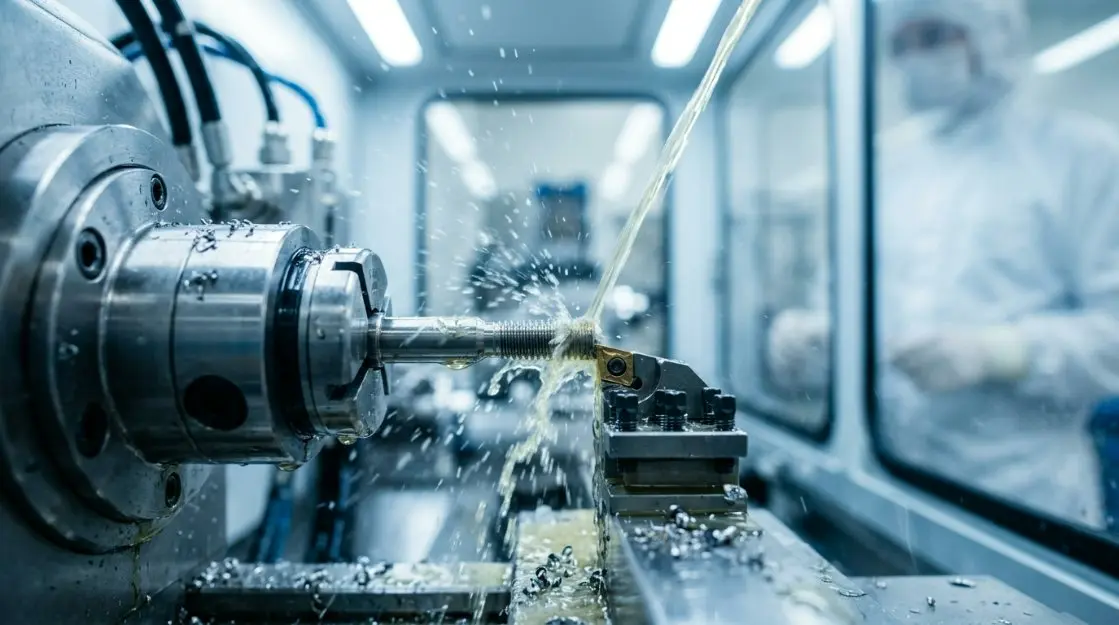
At the center of Sanluo Precision's technical superiority is the proprietary MediSync Precision CNC Protocol. This advanced fabrication and quality control framework is specifically engineered to handle the ultra-tight tolerances, structural complexities, and biocompatibility constraints of medical implants, diagnostic equipment, and surgical instruments. By implementing Sanluo's high-tech CNC machining medical parts service, we ensure raw material molecular integrity is preserved through carefully mapped toolpaths and thermal-controlled machining speeds.
The MediSync Precision CNC Protocol systematically prevents micro-cracking and material fatigue. Using advanced multi-axis machining centers (with up to 5-axis synchronous motion), we eliminate the errors introduced by manual part repositioning. From processing surgical robotic limbs to micro-fluidic medical valves, this protocol regulates cutting speeds, feeds, and thermal gradients down to micro-adjustments per millisecond, ensuring perfect geometric concentricity and exceptionally low surface roughness (Ra < 0.4μm prior to polishing).
To ensure a flawless transition from your prototype phase to high-volume commercial production, Sanluo Precision uses an optimized, highly communicative onboarding framework. Below is the step-by-step pathway developed for US medical engineers.
The process begins when you upload your 3D step files and 2D engineering drawings to our secure server. Our engineering team conducts an exhaustive Design for Manufacturability (DFM) analysis to optimize geometries for tool access and chip evacuation. During this phase, we assist in finalizing your biocompatible material selection—whether you require Medical Grade Titanium (Grades 5 and 23), Stainless Steel 316L, PEEK, or high-performance fluoropolymers.
Upon CAD approval, the project transitions to prototype development. This phase utilizes our MediSync Precision CNC Protocol on dedicated rapid-response machining units. We record and monitor the manufacturing process through our AI optical tracking system. US clients receive continuous telemetry regarding cutting forces, surface temperature profiles, and in-line probe dimensions, ensuring the rapid prototype matches the exact theoretical model.
For medical devices requiring fluid isolation, IP67 or IP68 ratings, or mechanical integration (such as endoscopy housings or surgical camera casings), we execute specialized seal-path machining and high-accuracy thread milling. Our team validates internal clearances and tests structural integrity under simulated environmental pressures to ensure the final mechanical interfaces integrate seamlessly with gaskets, O-rings, and electrical connectors.
Once machining is complete, components undergo ultrasonic cleaning and chemical passivation (complying with ASTM A967/F86 standards) to eradicate free iron particles and establish a highly corrosion-resistant oxide layer. Every part is individually serialized, packaged in a cleanroom-controlled environment, and shipped with complete material test reports (MTR), CMM inspection sheets, and Certificate of Compliance (CoC) records, enabling direct-to-assembly-line integration upon arrival at your US facility.
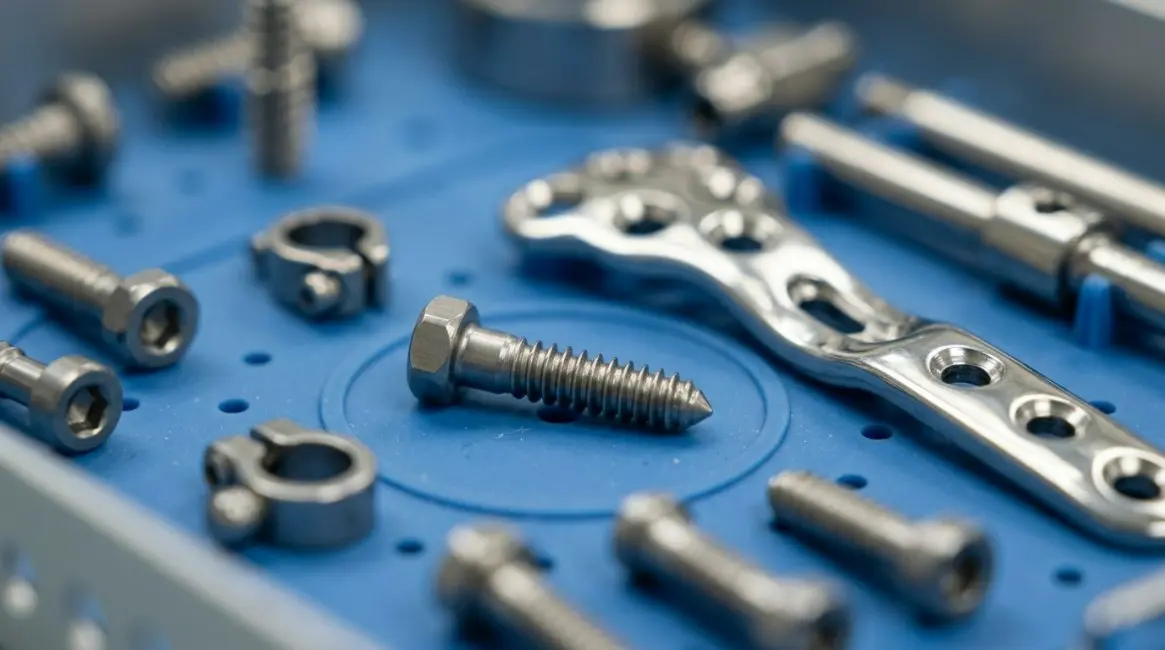
Selecting the optimal material is critical to both mechanical performance and long-term biocompatibility. The matrix below contrasts the properties of standard and advanced materials processed via the MediSync Precision CNC Protocol.
| Material Grade | Tensile Strength (MPa) | Biocompatibility Rating | Machining Tolerance Limit | Primary Medical Application |
|---|---|---|---|---|
| Stainless Steel 316L | 485 - 515 | High (Temporary Contact) | ±0.005 mm | Surgical instruments, orthopedic fixations, cannula hubs |
| Titanium Grade 5 (Ti-6Al-4V) | 895 - 1000 | Exceptional (Permanent Implant) | ±0.008 mm | Bone screws, joint replacements, dental implants |
| Medical Grade PEEK (Optima) | 90 - 100 | Exceptional (Radiolucent) | ±0.010 mm | Spinal cages, cranial implants, target fixtures |
| Stainless Steel 440C | 1700 - 1900 (Hardened) | Moderate (Non-Implant) | ±0.003 mm | Scalpel blades, surgical shears, drill guides |
Precision medical design demands rigorous mathematical validation. Below are two engineering calculations fundamental to complex multi-part enclosures and electromechanical medical systems.
1. Worst-Case and Root-Sum-Square (RSS) Tolerance Stack-Up
When assembling multiple machined components, mechanical designers must calculate the cumulative dimensional variance. The Worst-Case limit aggregates all variances linearly, while the RSS model provides a realistic statistical estimation assuming normal distribution:
Worst-Case Tolerance (T_wc) Formula:
T_wc = t_1 + t_2 + t_3 + ... + t_n

Root-Sum-Square Tolerance (T_rss) Formula:
T_rss = √( (t_1)² + (t_2)² + (t_3)² + ... + (t_n)² )

Where:
  t_i = individual component tolerance variation.
  For a 4-part enclosure where each part holds a critical mating tolerance of ±0.005 mm:
  T_wc = 0.005 * 4 = 0.020 mm
  T_rss = √( 4 * (0.005)² ) = 0.010 mm
2. Tariff-Adjusted Total Cost of Ownership (TCO) Calculation
To accurately compare sourcing medical parts from China versus domestic alternatives, procurement specialists can leverage the following equation to factor in Section 301 tariffs, transport logistics, and quality assurance savings:
TCO_Sourced = (Unit_Price * Vol) + Logistics_Costs + Duties_and_Tariffs + Quality_Audit_Costs - Defect_Savings

Where:
  Duties_and_Tariffs = (Unit_Price * Vol * Tariff_Rate_Percentage)
  Defect_Savings = (Volume_Defect_Rate_Standard - Volume_Defect_Rate_Sanluo) * Cost_Per_Defect_Incident
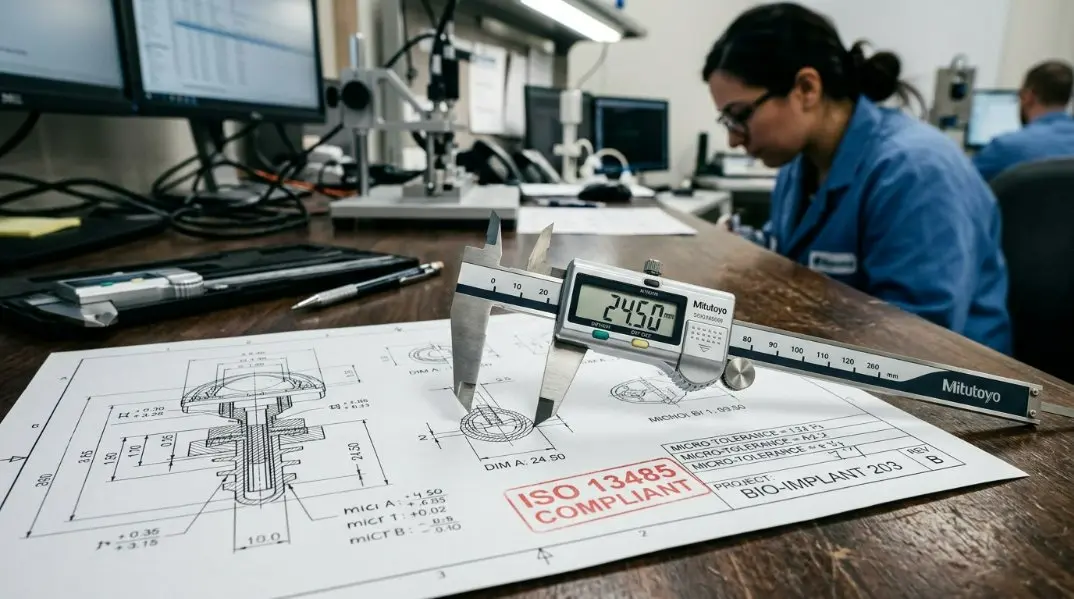
To qualify for the global healthcare landscape, products must successfully meet stringent certifications. Sourcing your components from a knowledgeable manufacturer who understands these validation frameworks prevents expensive regulatory roadblocks. Partnering with an experienced, quality-oriented supplier of CNC machined medical parts like Sanluo Precision is vital.
Our operational infrastructure is optimized around critical regulatory standards:
Using Sanluo's 5-axis CNC machining, we consistently achieve linear dimensional tolerances as low as ±0.005 mm (and down to ±0.002 mm under specialized cleanroom conditions). Our structural cutting intervals are fully adjustable down to the single micrometer level, allowing us to machine intricate heat-sink fins, thin-walled surgical housings, and customized sensor channels with absolute precision.
For modern connected medical devices (such as smart patient monitors or medical dispensers), Sanluo Precision provides full component serialization. We supply digital records of each component's manufacturing process (including dimensional validation, material composition data, and surface roughness logs) that can be easily scanned via QR codes. These QR codes can be bound directly into secure cloud inventory databases (like AWS IoT Core or industrial ERP networks) to provide an unbroken, auditable digital chain of custody.
When developing powered medical systems, users must ensure electrical isolation and proper heat management. All machined metal housings are structured with integrated mechanical grounding pathways to comply with UL safety standards. For material biocompatibility, we offer raw materials certified to ISO 10993 and USP Class VI guidelines, which undergo cytotoxicity, systemic toxicity, and hemocompatibility testing to guarantee absolute safety when interacting with human tissue.
Streamlining your medical component procurement is vital for meeting developmental timelines and budget parameters. At Sanluo Precision, we combine high-end Chinese manufacturing speed and cost advantages with rigorous Western regulatory engineering compliance. Let us help you successfully execute your next generation of life-saving medical designs.
As a top-tier professional manufacturer, we deliver direct factory-price solutions for dynamic scaling, engineering projects, and custom systems globally.
Visit Official Website →