
Article Summary: Laser Beam Machining (LBM) is a high-precision, non-contact manufacturing process widely used across industries such as aerospace, automotive, electronics, and medical devices. This article explains how LBM works, its advantages, applications, challenges, and how businesses can leverage it to solve real production pain points such as material distortion, tool wear, and micro-scale accuracy requirements.
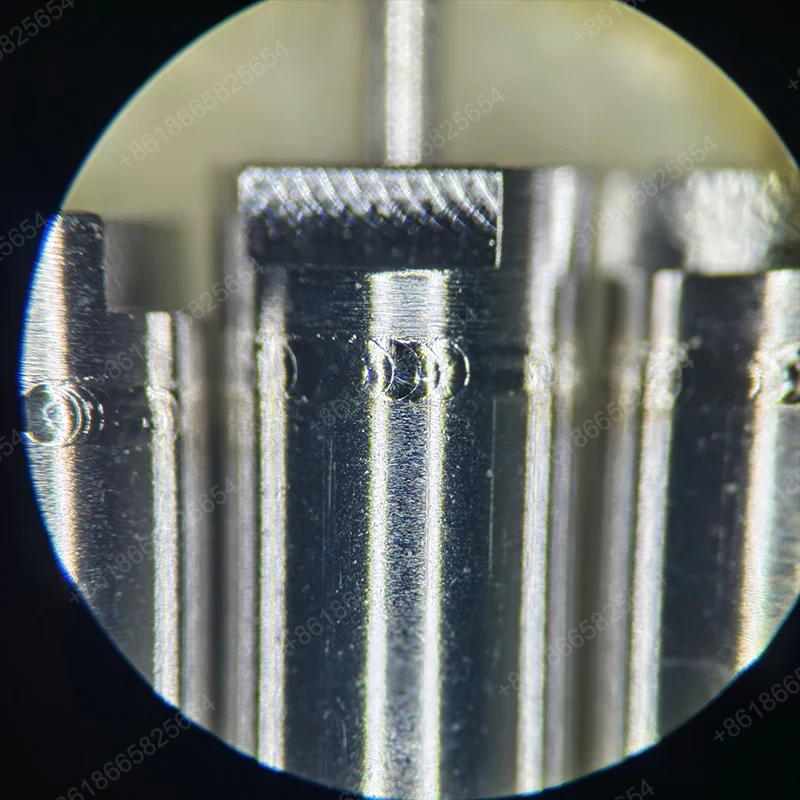
Laser Beam Machining (LBM) is an advanced manufacturing technique that uses a highly focused laser beam to remove material through melting, vaporization, or ablation. Unlike conventional machining processes, LBM does not involve physical contact between the tool and the workpiece, making it ideal for delicate, hard, or brittle materials.
Manufacturers today face increasing demands for tighter tolerances, complex geometries, and faster production cycles. Laser Beam Machining addresses these challenges by delivering unmatched precision and flexibility.
The core principle of Laser Beam Machining lies in the conversion of electrical energy into a concentrated beam of light energy. This beam is directed through optical systems and focused onto a small spot on the workpiece.
This process enables extremely fine machining without mechanical stress or deformation.
| Advantage | Description | Customer Benefit |
|---|---|---|
| Non-contact Process | No physical tool touches the material | Eliminates tool wear and reduces maintenance costs |
| High Precision | Micron-level accuracy achievable | Ideal for intricate and micro-scale components |
| Minimal Heat Affected Zone | Localized heating reduces thermal damage | Maintains material integrity |
| Versatility | Works on metals, plastics, ceramics, and composites | Supports diverse production needs |
| Automation Friendly | Easily integrated with CNC systems | Improves productivity and consistency |
These advantages make LBM particularly attractive for industries requiring high repeatability and minimal defects.
Laser Beam Machining is widely adopted across multiple sectors due to its adaptability and precision.
Companies like Sanluo Precision are leveraging this technology to provide high-performance machining solutions tailored to modern industrial requirements.
| Criteria | Laser Beam Machining | Traditional Machining |
|---|---|---|
| Tool Wear | None | High |
| Precision | Very High | Moderate to High |
| Material Contact | No | Yes |
| Complex Geometry | Excellent | Limited |
| Maintenance | Low | High |
This comparison highlights why many manufacturers are transitioning to laser-based solutions for critical applications.
Despite its advantages, Laser Beam Machining is not without limitations:
However, with proper system selection and expertise, these challenges can be effectively managed.
Selecting the right Laser Beam Machining setup depends on several critical factors:
Working with experienced providers such as Sanluo Precision ensures that your machining solution is optimized for both performance and cost efficiency.
For more detailed insights, you can explore the product page:
https://www.sanluocnc.com/laser-beam-machining
Q1: What materials can be processed using Laser Beam Machining?
A: Metals, plastics, ceramics, composites, and even some delicate materials can be processed effectively.
Q2: Is Laser Beam Machining suitable for mass production?
A: Yes, especially when integrated with CNC and automation systems.
Q3: Does LBM cause thermal damage?
A: The heat-affected zone is minimal compared to traditional methods, reducing the risk of damage.
Q4: How accurate is Laser Beam Machining?
A: It can achieve micron-level precision, making it ideal for high-precision industries.
Q5: What industries benefit the most from LBM?
A: Aerospace, medical, electronics, automotive, and precision engineering sectors benefit significantly.
Laser Beam Machining is redefining how manufacturers approach precision, efficiency, and innovation. Whether you are looking to improve product quality, reduce production costs, or handle complex geometries, adopting advanced laser solutions is a strategic move.
Sanluo Precision is committed to delivering cutting-edge machining technologies tailored to your specific needs. If you are ready to elevate your manufacturing capabilities and stay ahead in a competitive market, contact us today to explore customized Laser Beam Machining solutions.