
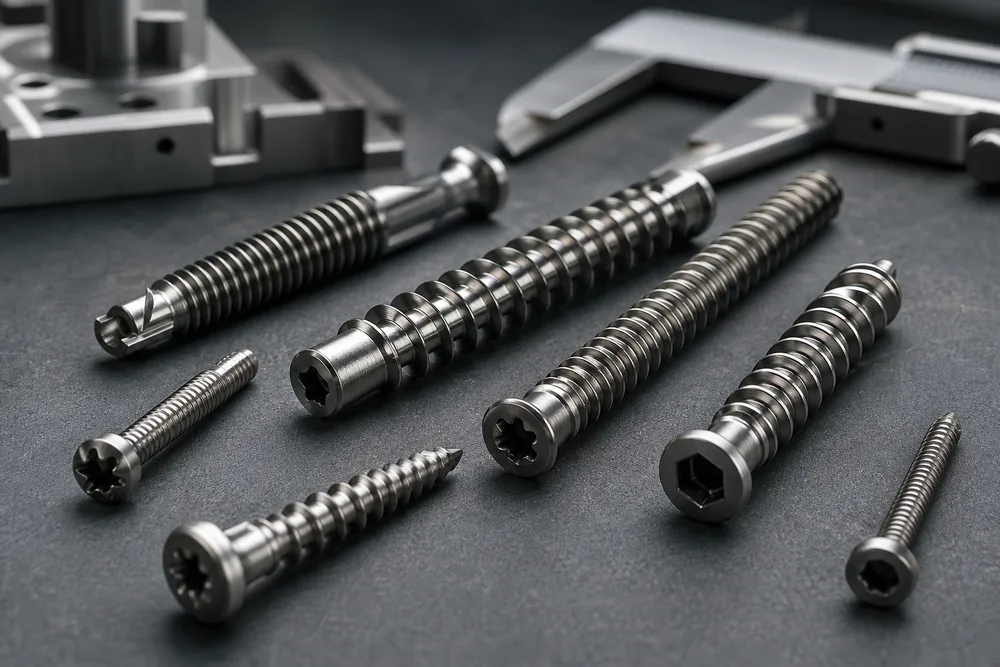
Key Takeaways for Sourcing Custom Medical Screw Components from Sanluo Precision
- Sanluo Precision lists titanium alloy bone screws, dental pins, bone plate screws, spinal screw rod systems, and joint-replacement screw work within its medical machining category.
- Material callouts matter: Ti-6Al-4V ELI under ASTM F136 and 316L stainless steel under ASTM F138 are named by Sanluo, but the drawing and purchase order must control the exact requirement.
- Thread method, drive geometry, inspection plan, lot traceability, and change control should be settled before the first article—not after production has started.
- A machining supplier is not automatically the legal manufacturer or the party responsible for finished-device sterilization, packaging validation, or US FDA compliance.
Precision medical screw machining is less forgiving than ordinary fastener work. A burr at the thread start, an incomplete internal drive, or an unclear material heat record can stop an orthopedic or dental program long after the part appears acceptable on a bench. US buyers should evaluate the supplier against the print, the intended device use, and the quality agreement—not against a generic claim of “medical grade.”
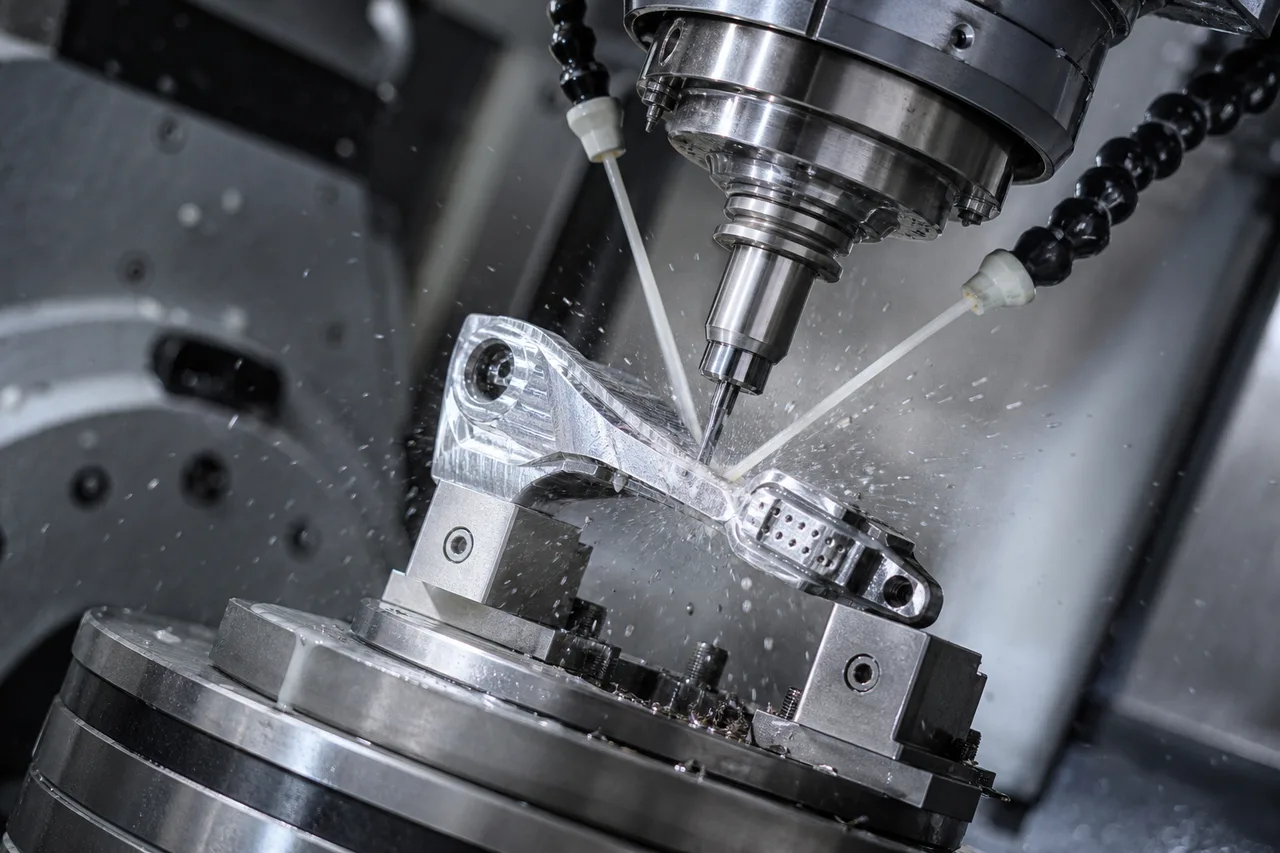
Sanluo Precision is a Shenzhen-based CNC machining parts manufacturer offering medical CNC machining, micro machining, CNC lathe work, Swiss-type lathe work, EDM, laser machining, and precision grinding. Its precision medical screw machining service identifies orthopedic screw families and accepts quantities from one piece upward. That can suit prototype, development, and controlled production needs, provided your qualification package is specific enough to quote and inspect.
Medical Screw Machining Capabilities: Materials, Thread Features, Applications, and Process Comparison
Medical screw programs often combine a slim shank, a demanding thread form, a recessed drive, and a material that is not especially forgiving to machine. The practical question is not which machine is “best.” It is which sequence protects the functional surfaces without creating a downstream inspection problem. A deep bone-screw thread, for example, raises different concerns than a fine dental pin or a screw feature incorporated into a spinal system.
Sanluo lists thread milling and thread forming, along with turning, grinding, EDM, and laser machining. Those are useful process options, not interchangeable labels. Your drawing should identify the features that govern function: thread designation, lead-in condition, major and minor diameter requirements, drive recess, bearing face, shaft transitions, and any prohibited burr locations. Review Sanluo’s stated medical screw machining capabilities against those specific features before releasing a purchase order.
Materials and Screw Features: Ti-6Al-4V ELI, 316L Stainless Steel, Internal Hexagon, TORX, and Small-Shaft Geometry
Sanluo identifies Ti-6Al-4V ELI (ASTM F136) and 316L stainless steel (ASTM F138) for this category. These standards should not be treated as shorthand for an entire acceptance plan. You still need to state the required material condition, the certificate format, record linkage to the lot, and any customer-controlled restrictions in your sourcing documents. If the component is part of an implanted-device system, your internal design and regulatory teams should determine which records must travel with the lot.
Internal hexagon and TORX drive features deserve more attention than they usually get at RFQ stage. The mating driver, recess depth, corner condition, and debris control can all affect torque transfer. Small-shaft geometry adds another risk: a sharp transition may be harder to control than the nominal shaft diameter itself. Ask how the feature will be machined and inspected, especially where a drive recess meets a thin head section.
Thread Milling, Thread Forming, Swiss-Type Turning, Grinding, EDM, and Laser Machining for Medical Screw Programs
Swiss-type lathe machining is a turning method in which a guide bushing supports bar stock close to the cutting zone while the workpiece advances through it. That support is particularly useful for long, narrow screw shafts because it helps limit deflection during turning. It does not eliminate process risk. Bar condition, guide-bushing setup, cutoff strategy, and the relationship between turned and threaded features still determine whether the finished screw holds the drawing.
| Process | Where it fits | Buyer review point |
|---|---|---|
| Swiss-type turning | Small-diameter shafts and turned screw bodies | Confirm control of runout, transitions, and cutoff condition. |
| Thread milling | Machined external threads and controlled thread geometry | Define thread inspection method and lead-in requirements. |
| Thread forming | Threads produced by forming rather than cutting | Approve the resulting form, surface condition, and acceptance criteria. |
| Grinding, EDM, and laser machining | Selected precision, recess, or secondary features | Identify feature-specific finish, recast, edge, and cleanliness expectations. |
Thread forming can be appropriate where the design calls for it, while thread milling gives a different route to generated thread geometry. EDM and laser machining can address selected features, and grinding can be relevant where a geometry or finish requirement calls for it. Do not specify a process merely because it sounds precise; specify the finished feature and let the supplier document the proposed route.
How US Buyers Can Qualify a Precision Medical Screw Machining Supplier: A Step-by-Step RFQ-to-Production Process
A clean RFQ saves weeks. The usual failure is sending a PDF drawing without revision status, inspection criteria, or a definition of what “medical” means for the order. The supplier then prices a reasonable interpretation, while the buyer assumes controls that were never written down. That gap becomes expensive during first-article review.
Qualification should move from feasibility to evidence. Start with the actual released design inputs, then establish what records must accompany parts and what changes require written approval. For cross-border sourcing, include shipping, import, labeling, and document-delivery expectations early. These are procurement details, but they affect lot release just as surely as a measured diameter does.
Prepare the Drawing, Material, Thread, Surface-Finish, Packaging, and Quantity Inputs Needed for an Accurate Quote
- Send the controlled drawing and revision. Include tolerances, critical characteristics, GD&T where applicable, and clear drive-feature details.
- Name the material requirement. State the applicable material standard, required records, and any approved-source or condition requirements.
- Define threads and finish. Identify thread callouts, acceptable edge condition, surface-finish requirements, and prohibited defects such as loose burrs.
- Describe packaging. State part protection, count, labeling, cleanliness, and whether packaging is only for transit or part of the finished-device configuration.
- State quantity and program stage. One-piece feasibility work, first articles, and repeat lots need different planning assumptions.
Attach mating-part information if torque transfer, interface fit, or assembly behavior matters. A screw can measure correctly and still perform poorly with its intended driver or plate. That is not a machining mystery; it is an incomplete design-input package.
Define First-Article Inspection, Lot Inspection, Material Certification, Traceability, and Change-Control Requirements
Put the first-article expectation in writing. Specify which dimensions require reported results, which gauges or test methods are acceptable, what sample basis applies to subsequent lots, and who approves the submission. If you need photos of drive recesses, thread-go/no-go results, or raw-material certificate review, say so before parts are made.
Traceability needs a practical chain: incoming material record, internal work order or lot identifier, inspection report, packaging label, and shipment documentation. Change control should cover material source, machining route, critical tooling, inspection method, and subcontracted operations where relevant. The point is not paperwork for its own sake. It is being able to determine what changed if a field complaint or incoming discrepancy appears months later.
Precision Medical Screw Machining FAQ: Is Sanluo the Legal Manufacturer, Which Quality Documents Are Available, and How Are FDA/QMSR Responsibilities Assigned?
Sanluo Precision should not be presumed to be the legal manufacturer of your finished medical device solely because it machines a screw component. Its supplied description identifies it as a CNC machining parts manufacturer. The OEM, specification developer, and contractual supply chain must determine legal-manufacturer status, document availability, and the allocation of FDA/QMSR duties in writing.
That distinction matters. A contract component supplier may manufacture to your drawing and provide agreed evidence, while the device OEM retains responsibility for design controls, supplier controls, device record obligations, and finished-device release. Do not use a marketing category page as proof of a quality-system certificate, regulatory registration, implantable-device authorization, sterilization capability, or legal-manufacturer role. Ask for current, controlled records.
What Documentation Should Buyers Request, Including Current ISO Certificates, Material Records, Inspection Reports, and Lot Traceability?
Request the supplier’s current ISO certificate if required by your supplier-qualification procedure, then verify its scope, issuer, validity, and site address independently. Also request material certificates tied to the supplied lot, first-article and lot inspection reports, a traceability description, and records for any agreed external processes. Sanluo’s public category description names materials and machining methods; it does not, by itself, establish which documents will be included with your order.
Your quality agreement should state document language, format, retention expectations, approval workflow, and what happens if a certificate or inspection record is missing. For critical characteristics, identify the reportable dimension and acceptance method rather than asking for a vague “full inspection.” That wording gives both parties something objective to execute.
Who Validates Device Sterilization and Packaging, and How Should US FDA/QMSR Responsibilities Be Allocated Between the OEM and Component Supplier?
The finished-device manufacturer is generally responsible for ensuring that device sterilization and finished packaging are validated as required for the marketed device. A precision screw supplier can manufacture, inspect, and pack components to agreed requirements, but component transit packaging is not automatically a validated sterile barrier system. The OEM should define the intended state of the supplied component: nonsterile manufacturing input, clean component, or another specifically controlled condition.
Allocate responsibilities through a quality agreement. The OEM should retain duties that belong to the finished device and its regulatory submission or market authorization. The component supplier should be assigned only the controls it can actually perform and document: machining, incoming material verification, in-process and final inspection, lot identification, packaging for shipment, notification of defined changes, and record provision. Have your regulatory and quality teams review that allocation against the current US FDA Quality Management System Regulation requirements and your device-specific obligations.
Request a Medical Screw Machining Review from Sanluo Precision: Share Your Drawing and Qualification Requirements at
Send a controlled drawing, revision level, material callout, thread and drive details, target quantity, and the documents you expect with the quote. Include your first-article format, traceability needs, packaging instructions, and proposed change-notification terms. If a feature is functionally critical, flag it instead of assuming the supplier can infer its importance from a tight tolerance alone.
That review is the right place to ask which features fit Swiss-type turning, thread milling or forming, grinding, EDM, or laser machining, and how the proposed inspection plan will address them. Start with the official Sanluo Precision page, then submit the same technical package your quality team will use to qualify the supplier.
Start a Medical Screw Machining Review
Share your drawing, material requirement, thread details, quantity, first-article plan, and traceability expectations for a focused manufacturability discussion.
Visit Official Website →